
Speak up for Public Lands Staff
The people who care for our public lands are disappearing.
What is happening?
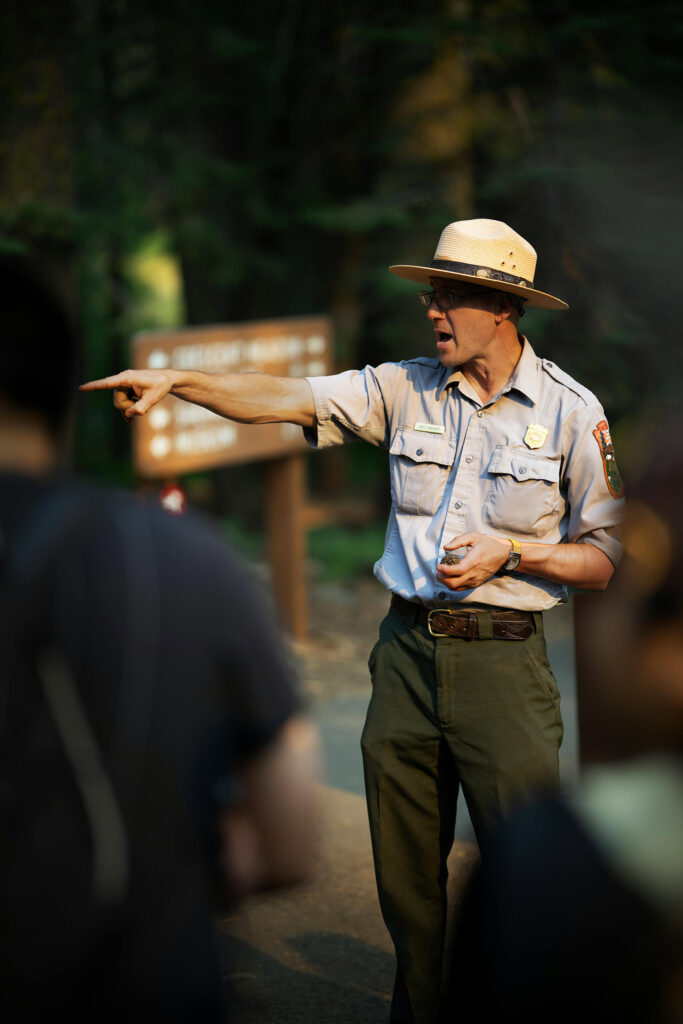
Public lands agencies have lost thousands of employees nationwide, leaving fewer people to care for the parks, forests, and open spaces families depend on.
Since January 2025, more than 5,800 public lands workers have been fired or pushed out across six Western states, including nearly one in four permanent National Park Service employees and approximately 3,400 U.S. Forest Service workers.
For families, these cuts can mean closed campgrounds, unmaintained trails, slower emergency response times, increased wildfire risks, and fewer opportunities for children to safely connect with the outdoors.
We’re already seeing the consequences: overflowing trash cans, closed facilities, and fewer staff available to maintain and protect the public lands we all share. The proposed FY2027 budget would cut public lands funding by another 35%, putting even more of these essential jobs at risk.
¿Qué podemos hacer?
Tell Congress to fully fund our public lands and reinstate the staff who care for them.
If we want our kids to continue enjoying safe, accessible, and well-maintained parks, trails, and public lands, we need to speak up now. Contact your Member of Congress and urge them to support the Public Lands Workforce Stability Act (H.R. 8523), which would help rebuild the workforce that protects and cares for the outdoor spaces our families depend on.
Public lands workers are the backbone of the outdoor spaces our families depend on. They maintain trails, respond to emergencies, educate visitors, protect wildlife habitat, and enforce the rules that keep these places wild.
Since early 2025, mass firings driven by the Department of Government Efficiency (DOGE) have hollowed out agencies, including the National Park Service (NPS), the U.S. Forest Service (USFS), the Bureau of Land Management (BLM), and the U.S. Fish & Wildlife Service (FWS). In February 2025, more than 1,000 probationary NPS workers were abruptly dismissed in what became known as the “Valentine’s Day massacre.”
The impacts are real and growing:
- Campgrounds have been closed or left unmonitored
- Trails are going unmaintained, creating safety hazards
- Visitors are reporting wildlife encounters without rangers present
- Wildfire response capacity is being reduced at a time when fire risk is increasing
The proposed FY2027 budget would reduce staff by 30% across NPS, USFS, FWS, and BLM compared to 2024 levels — a cut our public lands simply cannot absorb.
Speak up for the Roadless Rule
58 million acres of wild forest are on the chopping block.

What is happening?
The Roadless Rule has protected 58 million acres of our wildest and most untouched National Forest land for more than 25 years, with no new roads and no industrial logging in places that have never had them. Now the U.S. Department of Agriculture has opened a formal rulemaking process to rescind it entirely. The Roadless Rule is one of the most important protections for America’s wild forests. Joining us in ensuring they remain resilient and accessible for future generations.
Why does it matter?
If the Roadless Rule is eliminated, these forests, including headwaters that supply drinking water to communities across the West, could be opened to road construction and logging for the first time. Wildlife corridors that species depend on for survival would be fragmented. Wildfire risk could increase. And the quiet, wild places where our families hike and camp could be changed forever.
What Can We Do?
Submit public comment before Sept 21st
The federal rulemaking process requires agencies to accept and consider public comments. Your voice matters here. Submit a comment, and use the map tools below to see what’s at stake in your backyard.
What is the Roadless Rule?
The Roadless Area Conservation Rule was finalized in January 2001 after the largest public comment process in U.S. Forest Service history, with more than 1.6 million comments, the vast majority in support. It prohibits road construction and most logging in Inventoried Roadless Areas (IRAs) within the National Forest System.
These 58 million acres represent some of the last truly wild forests in the country. They include:
- Critical headwaters and clean water sources for downstream communities
- Intact wildlife habitat and migration corridors for elk, bear, wolverine, and many other species
- Some of the most popular backcountry recreation destinations in the West
- Natural firebreaks and climate refugia, forests that are more resilient to fire and drought precisely because they haven’t been roaded or logged
What the USDA rulemaking means:
When an agency opens a formal rulemaking to rescind an existing rule, it begins a public comment period before any final decision is made. This is our window to act. Thousands of comments from everyday people, hikers, hunters, ranchers, and parents carry real weight in this process.
What’s at stake in our states:
Inventoried Roadless Areas cover millions of acres across Colorado, Montana, and Arizona. To see what’s in your area, use the Forest Service state maps.
Help Us Protect Our National Monuments
Our national monuments are being targeted, and a new legal tool makes the threat even bigger.
What is happening?
National monuments protect some of our most irreplaceable landscapes, places where our kids can hike through ancient canyons, learn about Indigenous history, and see wildlife in their natural habitats. Right now, those protections are under attack in a new and particularly dangerous way.

In early 2026, Utah politicians used the Congressional Review Act (CRA) to introduce a resolution to permanently repeal the management plan for Grand Staircase-Escalante National Monument. If successful, this would set a precedent allowing Congress to use the same tactic against any national monument’s management plan across the country. Worse, once something is reversed under the CRA, a nearly identical plan cannot be put in place again; the damage would be permanent.
¿Qué podemos hacer?
Contact your representatives and tell them: keep your hands off our national monuments.
The monuments we are fighting for in our states are linked below. Find your state to learn about these magnificent landscapes we are working to protect.
What is the Congressional Review Act (CRA)?
The Congressional Review Act is a law that allows Congress to overturn federal agency rules and regulations with a simple majority vote, bypassing the usual 60-vote Senate threshold. It was designed for routine agency rulemaking, but politicians have found a new use for it: targeting the management plans that govern how our national monuments are protected and used.
How it’s being used against monuments:
In January 2026, the Government Accountability Office ruled that the Grand Staircase-Escalante National Monument management plan qualifies as a “rule” under the CRA. That opened the door for Rep. Celeste Maloy and Sen. Mike Lee of Utah to introduce a joint resolution to throw out that plan entirely, replacing it with a weaker 2021 version.
The most alarming part: under the CRA, once a rule is overturned, any future rule that is “substantially the same” is permanently prohibited. This means land managers could never write a comparably protective plan again, making the damage essentially irreversible.
Why this matters beyond Grand Staircase:
If this approach succeeds, it creates a roadmap to gut the management plans for every national monument in the country. Bears Ears, Chaco Culture, Sonoran Desert, and others could be next. The CRA threat is not just about one monument in Utah — it is a strategy to dismantle protections for public lands one management plan at a time.
Raise Your Voice for the Land and Water Conservation Fund (LWCF)
America’s most important conservation funding tool is still under threat.
What is happening?
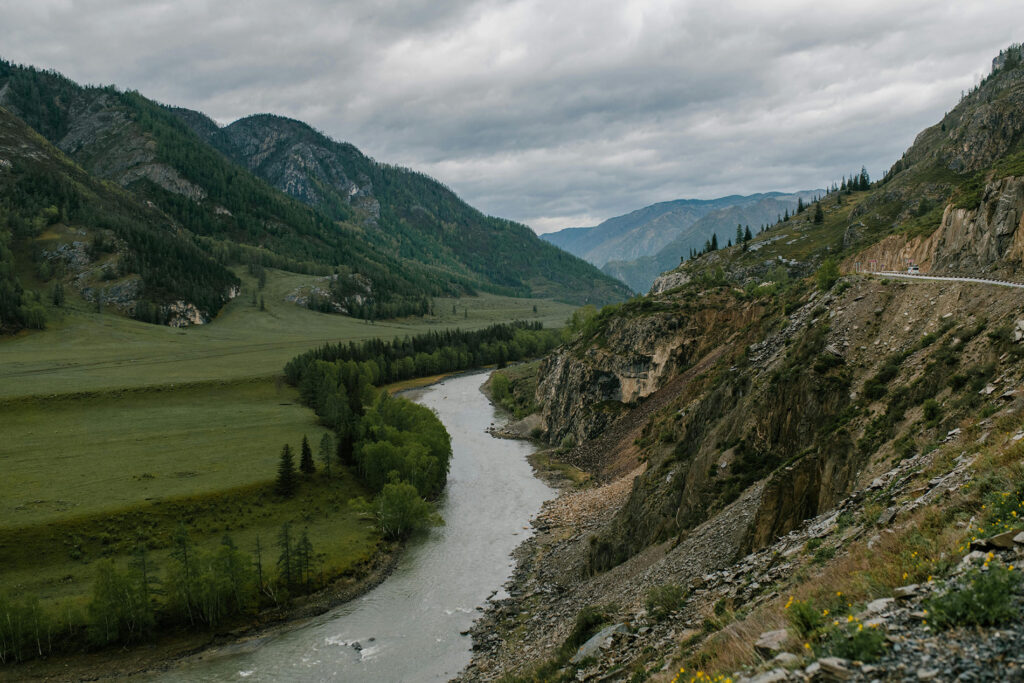
The Land and Water Conservation Fund is the backbone of America’s conservation infrastructure. For 60 years, it has used a small share of offshore oil and gas royalties, not taxpayer dollars, to fund conservation and recreation projects, protect national parks, wildlife refuges, forests, trails, and local playgrounds. The Great American Outdoors Act of 2020 finally guaranteed its full funding.
But in September 2025, the administration proposed reversing that guarantee, diverting LWCF funds entirely from conservation projects. Congress pushed back: in January 2026, the FY26 Interior Appropriations bill passed with LWCF funding intact, allowing 2025 and 2026 projects to move forward. That’s a real win, but the program needs permanent, protected funding, and the fight is not over.
¿Qué podemos hacer?
Stay informed and tell your representatives to permanently protect LWCF funding.
Use the tools below to see LWCF projects in your community, then contact your elected officials and tell them this program is worth protecting.
Interactive LWCF Project Map
LWCF Factsheet
LWCF Story Map
What is the Land and Water Conservation Fund?
Created in 1965, LWCF uses revenues from federal offshore oil and gas leases to fund conservation and recreation projects, at zero cost to taxpayers. It is authorized at $900 million per year and supports projects in every single U.S. state and territory.
LWCF funds four types of work:
- Federal land protection: Expanding national parks, forests, wildlife refuges, and trails
- State and local grants: Building and improving parks and playgrounds in communities across the country
- Working lands conservation: Protecting farms, ranches, and forests from development
- Historic and cultural preservation: Protecting battlefields and culturally significant sites
Why GAOA mattered, and why we still need to stay vigilant:
For 55 years, Congress diverted roughly $22 billion from LWCF for unrelated spending. The Great American Outdoors Act (2020) ended that diversion and made full $900M funding mandatory. The administration’s FY26 budget proposal, via Secretary Order 3442, attempted to reverse GAOA and redirect those funds. Congress blocked it for FY26, but the program faces annual threats as long as it lacks ironclad permanent protection.
What LWCF has done for our states:
LWCF has funded trail access, open space protection, and community parks across Colorado, Montana, and Arizona for decades. Use the interactive project map to find projects in your own community.
Become a Mountain Mama Today!
 SP
SP  EN
EN